Today I did a feline run (I did a cheetah because I hate myself apparently). I made it headless because I couldn't figure out head movements
For the bottom one, I added a skull to denote head movements after I cleaned up the neck movements a bit.
I used the above video (source: https://www.youtube.com/watch?v=zrqOAwCPowg) as a reference for the animation below.
I used the above video (source: https://www.youtube.com/watch?v=jtPAy3yXeCo) as a reference for the animation below (the skeleton pattern on the side of the horse really helped). I'll clean up the animation (not a fan of the front left hoof wiggle) later.
I cleaned up the quadruped trot and decided to make the horse a pink hell-horse for funsies. As an added bonus, the left front hoof wiggle ended up being obscured by flames in the finished animation.
Sunday, 28 May 2017
Wednesday, 24 May 2017
Casablanca review
Casablanca review:
Directed by Michael Curtiz in 1942, Warner Bros. Studio
Casablanca is set in the backdrop of WWII, where refugees fleeing the Nazi regime would come to the titular Casablanca for their last trip to the still-neutral America. The film follows the story of Rick Blaine, a, American cafe owner; Ilsa Lund, his former lover; and Victor Laszlo, Ilsa's husband and resistance leader.
Casablanca can be identified as a Classical Hollywood film by its defined narrative structure with a clear beginning, middle and end, inclusion of sound in the film in dialogue and music and clear instances of continuity editing to make the plot of the film easy to follow. In this film there is an instance of non-linear time in the form of the Paris flashback in the middle act, but otherwise the films time is linear.
As a film, Casablanca still holds up to narrative and cinematic standards today, so it is understandable that it would appear on many top ten film lists. The plot devices and dialogue have been referenced and parodied so often that they may slip into cliche though, although this is a minor critique.
For me, I had little to no interest in this film as I am only mildly interested by political intrigue and completely disinterested with romance. For someone who has similar tastes to me, I would not recommend this film; but for someone who can stomach the 'romance' genre, this movie is probably a worthwhile watch, despite it's age.
Monday, 22 May 2017
Side jump and lift
Jump cycles
Today we did some jump cycles, I used one of the references given and extended it out to 12 frames instead of 8 and personalised it a bitI have also began a lift cycle. This is the first cycle that I have done from scratch, without using the references given in class.
Here's the completed lift cycle with Dr. Franklyn hating every frame (they have their assistant Betty around for a reason)
Wednesday, 17 May 2017
Golden age of animation
The Golden Age of American Animation
Disney
Disney had their beginnings with Steamboat Willie (1928), a sound-synchronized animated feature featuring Mickey Mouse.The Silly Symphonies, beginning with The Skeleton Dance (1929), were a series of light-hearted musical animated shorts. The most successful 'Silly was The Three Little Pigs (1933), which won an Oscar for best short film. Another Disney character, Donald Duck, first appeared in the short The Wise Little Hen (1934).

Donald Duck in the early days
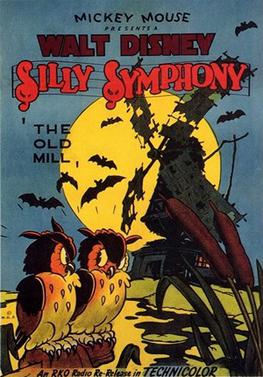
Disney also experimented with realism in animation in The Old Mill (1936), which used realistic animals and natural sound effects.
Fleisher Studios
Max Fleisher inventing the rotoscoping technique, where animated characters were drawn frame-by-frame over filmed action, creating life-like movement.Fleisher Studios also made Popeye and Betty Boop

For their live-action films, one of the most notable being Gulliver's Travels (1939), which used rotoscoping for the character Gulliver, which garnered criticism as the rotoscoped human characters clashed with the cartoons.
Fleisher also created the Superman (1941) animated cartoon, which gave Superman the power of flight (could only leap tall buildings before), the style of this cartoon influenced the stylistic direction of Batman: The Animated Series (1992-1995) and Superman: The Animated Series (1996-2000)
Warner Bros.
Tex Avery and his team reinvented animation by using an extreme and exaggerated style that incorporated elements of surrealism.Daffy Duck
Created by Tex Avery for the short film Porky's Duck Hunt (1937), and subsequently given a starring role in Daffy Duck and the Egghead (1938). Avery preferred the Egghead character (who later became Elmer Fudd) and dropped Daffy, which resulted in Daffys design changing over the years as he was passed on to different animatorsBugs Bunny
First appeared in Porky's Hare Hunt (1938), and was named after Ben "Bugs" Hardaway. Like Daffy, Bugs' appearance changed over timeThe evolution of Bugs Bunny over time
MGM
Hanna Barbera
founded by William Hanna and Joseph Barbera, who worked for MGM in the late 1930s. The first cartoon was Puss Gets the Boot (1940), which would later become Tom and JerryTerrytoons
Paul Terry's cartoons are known for their cheap production, minimum effort and no attention to detailBlog Research Golden Age Animator
Tex Avery
Credited with creating Droopy, Bugs Bunny, Daffy Duck, Screwy Squirrel, Elmer Fudd and many moreAvery worked for MGM studios, Warner Bros. studios, Paramount studios and Walter Lantz studios
Elmer Fudd Development
The current Elmer Fudd
As Egghead, he was teamed with Daffy Duck in Daffy Duck and Egghead (1938). He first emerges as Elmer Fudd in Elmer's Candid Camera (1941), with his contemporary appearance beginning to show in A Wild Hare (1940). Over this time, his nose was reduced in size, his head became larger and changed clothes to reflect his primary role as a hunter and foil to Bugs Bunny

A still from Elmer's Candid Camera, with both Elmer Fudd and Bugs Bunny's earlier appearances
Wednesday, 10 May 2017
Classical Hollywood
Classical Hollywood
Today we learned about classical Hollywood (aka the Golden age), a period of time lasting from the 1920s to the late 1950sBig five studios:
MGM
Paramount
Warner Bros
RKO Radio Picture
20th Century Fox

Smaller three studios:
Universal
Columbia

United Artists
Studios had complete control of a movies' making and screening through vertical integration, complete control from top (production) to bottom (exhibition).
MPPDA:
Was a trade body that served to:Reduce the increasing moral panic over disreputable movies
Encourage cooperation between studios, preventing entry to new competitors
To encourage overseas governments to allow screening of their products
The Hays Code:
the MPPDA hired Will Hays to put in place a self regulatory code of practice, titled the Hays Code in 1930. Until it's cessation in the late 1960's, the Hays Code prevented the depiction of sex (eg. prioritize marriage, demonize adultery, no childbirth, no mixed race couples etc.) and criminal behavior (no drugs/alcohol, no glorifying crimes and criminals, but can show hanging and and electrocutions for crime).Block Booking:
A practice where the studios would sell an entire years of movies as a single block. A block often contained one A-list movie among a slew of B-list movies. Studio-owned theatres were exempt from this block booking, which further cemented their monopoly of the movie market. This came to an end in 1948 with the US vs Paramount Pictures Inc. antitrust case that ended block booking and forced studios to sell their theatre chains.The Star System:
Studios 'owned' the stars, where the stars were employees of the studios to be bought and sold at their whim. Studio contracts prevented the stars from using drugs etc. that prevented them from 'ruining' their imageNarrative Structure:
clearly structure with a discernible beginning, middle and end, with linear chains of cause and effect and the narrative provides a comprehensive resolution at the end.BVA142 contact sheet
Subscribe to:
Posts (Atom)